Skip to content

Website design for contractors

Contractor websites that turn finished projects into estimate requests

Before a homeowner trusts a crew with a kitchen or an addition, they look online for finished projects like theirs, proof you're licensed and insured, and a way to ask for an estimate quick enough to do from a phone on the couch. We handle the design, the build and the launch, with each project captioned by its scope: your free first draft arrives in 5 to 7 business days, and you pay a fixed fee from $499 only if you decide to launch it.

  • Free first draft
  • Fixed price from $499
  • Pay only at launch

We usually recommend the Pro launch: up to 15 pages, $999 once.

What a contracting business website needs

Galleries by project type, credentials in plain sight, and estimate requests that come with a budget range.

  • Galleries by project type

    Kitchens, bathrooms, basements, additions, roofs, decks or whole-home remodels, each in its own gallery with before-and-after pairs and a line on the scope. Visitors find the job that looks like theirs instead of scrolling through everything.

  • Licenses, insurance and warranty up front

    Your license numbers, insurance, bonding and workmanship warranty, as you supply them, beside the estimate button and in the footer of every page. Homeowners often check these before they ever call.

  • Your process, step by step

    What happens from the first visit to the final walkthrough: estimate, design and selections, permits, demolition, build, inspections and cleanup, with rough timelines by project type. It sets expectations early and filters out mismatched ones.

  • Permits explained

    If you pull permits and schedule inspections, say so plainly and explain who handles what; it's a common worry, especially for people renovating for the first time. If homeowners pull their own, say that too.

  • An estimate request with the right questions

    Project type, address or town, ideal start date, a budget range and a few words about the job, with a phone number for a callback. You can answer serious requests first and arrive at the first visit prepared.

  • A page for each trade or service

    Roofers need repair, replacement and inspection pages; electricians need panel upgrades, EV chargers and rewiring; painters need interior, exterior and cabinets; remodelers need one per room. Each page is a clearer match for what people actually search.

  • Reviews and financing where people decide

    Links to your reviews on Google, Houzz or Angi, and to your financing partner for larger jobs, placed beside the galleries and the estimate form rather than tucked into the footer.

Sample sites we've designed

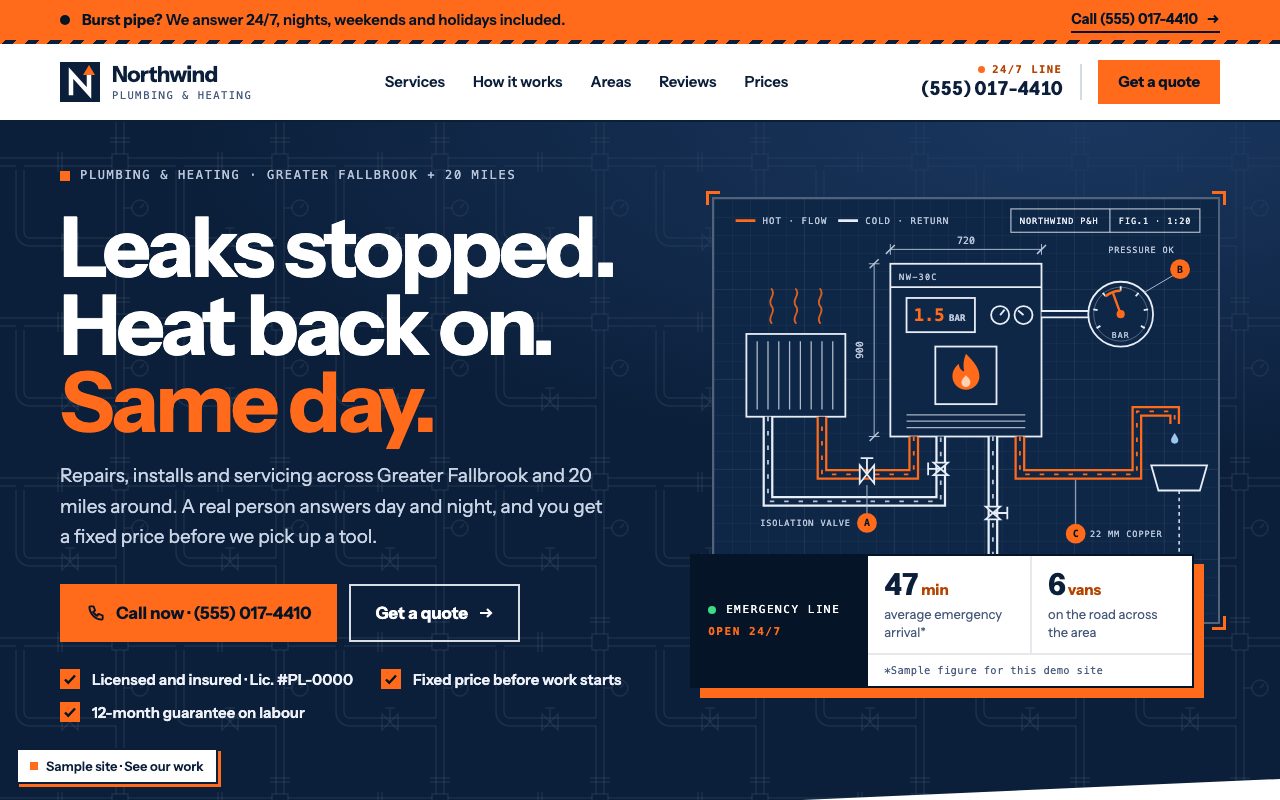
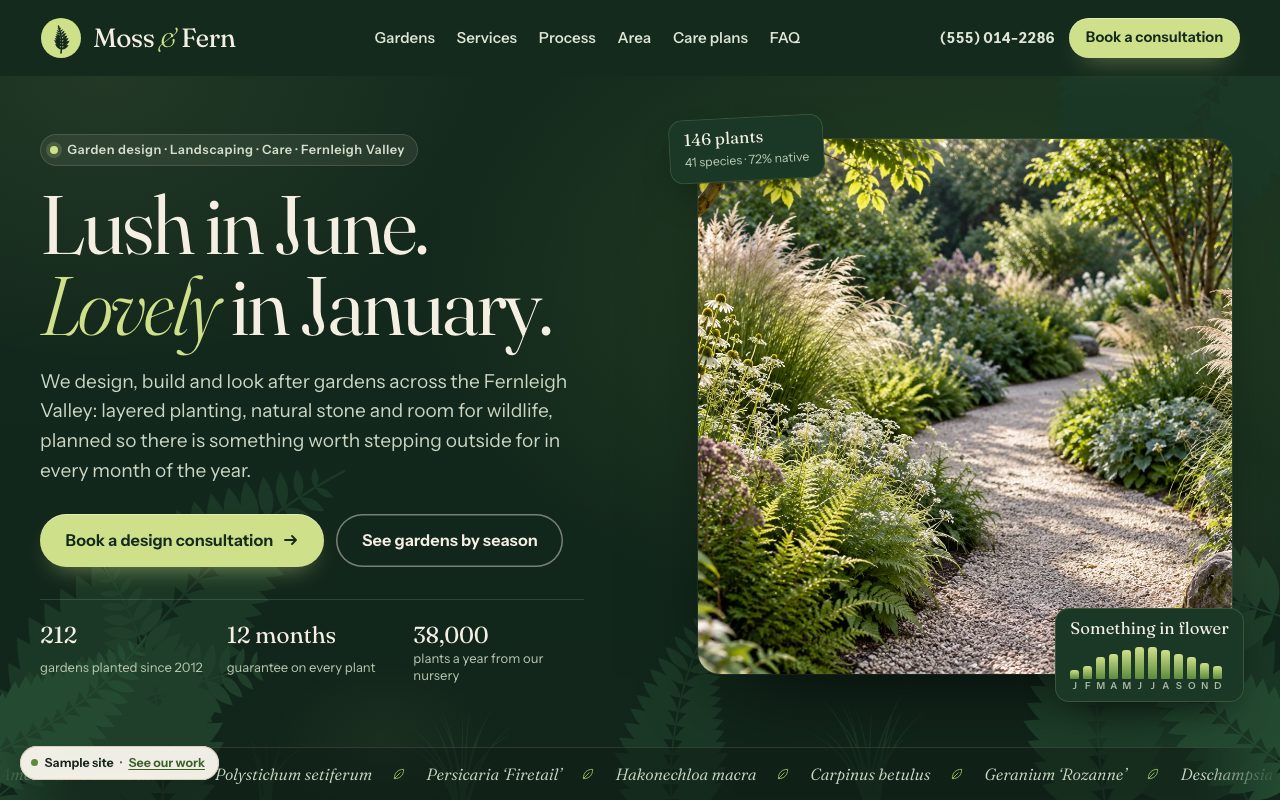
Sites we designed and built for made-up businesses, to show what we do: open one on your phone and try it. On your site, booking, ordering and shop buttons open the tools you already use.

See all the work

The pages a contracting business site usually has

  • Home
  • Services (a page per trade or room)
  • Project galleries by type
  • Our process and timeline
  • Licenses, insurance and warranty
  • About the company and crew
  • Request an estimate

Which plan fits

General contractors and remodelers usually want a gallery for each kind of project and a page per service, and unlimited rounds of changes help when more than one partner weighs in on the draft. That's the Pro launch: up to 15 pages for $999, paid once when you launch.

What we connect

Estimates, schedules and job updates stay in the software you already run (Jobber, Housecall Pro, ServiceTitan, Buildertrend or similar); the site links to it, to your financing partner's application, to your review profiles and to any client portal that software already provides. Estimate requests come straight to you, with none of the per-lead charges that lead-generation platforms add.

Common mistakes, and how we avoid them

  • Photos with no story

    A wall of unlabeled photos doesn't say what was done, how long it took or roughly what it involved. A caption with the project type and scope turns each one into a reason to call you.

  • Credentials you have to ask for

    If a homeowner has to phone to find out whether you're licensed and insured, many simply move on. Put the details where they look: by the estimate button and in the footer.

  • A bare "contact us" form

    Without the project type, timing and budget, every request needs a call just to sort it. With them, you know which to answer first and what to bring.

  • A gallery that stopped years ago

    Your latest finished job is your best marketing. If adding photos means hiring a developer, the gallery goes stale; we make adding a project a small edit.

How it works

Three steps, and most of the work is ours.

  1. 5 minutes

    Tell us about your business

    The short form, or a chat with the team. Send photos, your logo, your menu: whatever you have.

  2. 5 to 7 business days

    Get your free first draft

    Screenshots for computer and phone and a private preview link (2 to 3 business days with priority, overnight with rush). Ask for changes in plain words until it's right.

  3. When you're ready

    Approve, pay and launch

    Pay the fixed launch fee only when you're happy. With the care plan, we put the site live on your domain and look after it; without it, we hand you the files to host yourself.

More on how it works

Contractors: fixed prices

One fee, paid once when you launch. Choose by how many pages your site needs, or ask for a custom quote.

Website launch

A shop, café, trade or practice that needs the essentials done really well.

$499

one time, paid when you launch

Start your site
  • Up to 5 pages
  • 5 rounds of changes
  • Every page's words written for you
  • Designed around your photos and logo
  • Built to work beautifully on phones
  • Search-ready titles and descriptions
  • Hosted by us on the care plan, or yours to host

Signature launch

A larger firm, a group or a launch that has to be exactly right.

$2,000

one time, paid when you launch

Start your site

Everything in Pro, plus:

  • Up to 30 pages
  • Unlimited rounds of changes
  • A senior design lead as your one contact
  • Logo design (worth $149)

Custom

Bigger sites, several locations or brands, or special features.

Let's talk

a fixed quote from our team

Get a custom quote

Everything in Signature, plus:

  • More than 30 pages
  • Several locations or brands in one project
  • Special features, scoped with you
  • A fixed price agreed before you commit
  • Free first draft

    See your site before you pay anything. No card needed to start.

  • Fixed prices

    No hourly rates and no surprise invoices: anything extra is on our price list and agreed first.

  • Yours to keep

    Once it's paid for, the site and its files are yours, and a domain we register is in your name. Let us host it, or take it anywhere.

Questions contracting business owners ask

How much does a contractor website cost?

General contractors and remodelers usually choose the Pro launch: $999 once for up to 15 pages, fixed before we begin and paid when you approve the finished site. Hosting isn't included; it comes with the optional care plan, $49 a month, together with your domain and small edits such as new project photos. A one-trade business with a few services often fits the Website launch ($499). Compare the launches, or read what a small business website costs elsewhere.

Should I put my contractor license number on my website?

Yes, if your state or trade issues one. Show it with your insurance and any bonding near the estimate button and in the footer; some states require licensed contractors to include the number in their advertising, so check your licensing board's rules, and we'll add whatever you supply.

Can customers request an estimate on my website?

Yes. We build a short estimate form that asks for the project type, town, timing and budget range, and we can add a button to your scheduling tool alongside it. Requests come to you directly, with no fee per lead.

Will a website help my construction company get more jobs?

It helps when it answers what people check before they call: your past work, your licenses and insurance, where you work and how to start. It won't replace referrals, but it's often where a referral goes to check you out; this guide covers when a site is worth it.

How many pages does a contractor website need?

Most need a home page, a page for each main service, galleries by project type, an about page with your credentials and an estimate page. Add a page per town or trade and you're usually past a small site; this guide helps you count.

How should I show before-and-after photos?

In pairs taken from the same spot, grouped by project type and captioned with the scope of the work. Send new pairs after each job and we add them for you; the care plan includes 4 small edits a month.

Updated

Your contracting business website: the first draft is free

Tell us about your business and we'll do the rest. Questions first? Email hello@ciderwebsites.com.

Start your site

You pay only when you launch.